
AI Radiology Assistant
- #Computer Vision
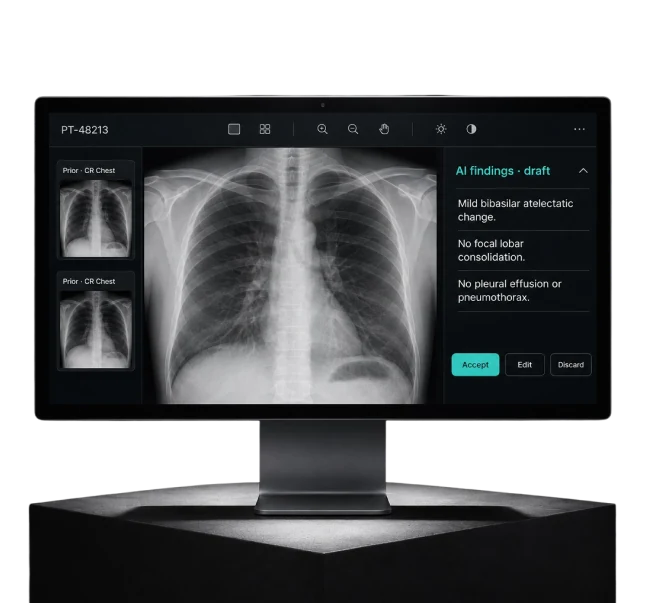
An AI layer for a network of diagnostic imaging sites that works inside the existing PACS and RIS. A vision-language model reads X-ray and CT studies, triage moves urgent ones up one shared worklist, and draft findings appear in the report.
- Computer Vision
Impact
The client reads imaging across several locations, with radiologists covering sites they are not physically in. Each site ran its own queue, earlier AI tools lived outside PACS and went unused, and technologists re-keyed data between PACS and RIS.
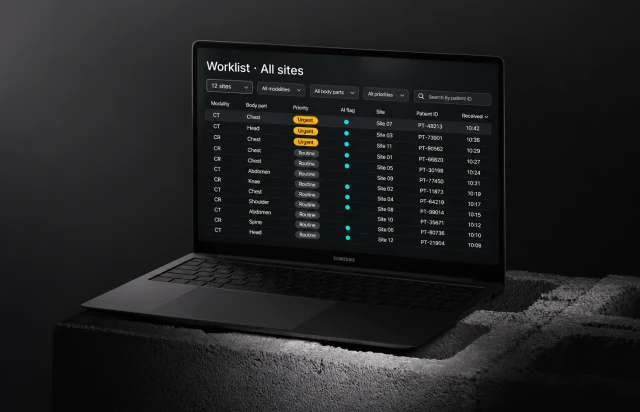
We built an integration layer and AI pipeline that connects 12 imaging sites into one worklist and writes draft findings back into the radiologist's report. Inference runs inside isolated VPCs in the client's own cloud account.
Services we provided
Discovery and Clinical Workflow Mapping
DICOM, HL7 and FHIR Integration
Vision-Language Model Deployment
Unified Worklist and Reporting UI
Multi-Site Rollout and Validation
Monitoring Dashboards
QA and Handover
Tech Stack

Python
Challenges and Solutions
🧐 Challenges
- Every site ran its own queue, so urgent studies could sit behind an hour of routine work acquired elsewhere.
- Earlier AI tools ran outside PACS, needed exports and a second window, and went unused.
- Study and report data were re-keyed between PACS and RIS, risking reports attached to the wrong accession number.
- DICOM and HL7 fields are filled differently by each vendor and site.
💡 Solutions
- New studies and relevant priors are pulled from PACS automatically as they arrive.
- A vision-language model reads X-ray and CT studies and drafts findings in plain clinical language.
- One worklist across 12 sites, ordered by urgency rather than by origin.
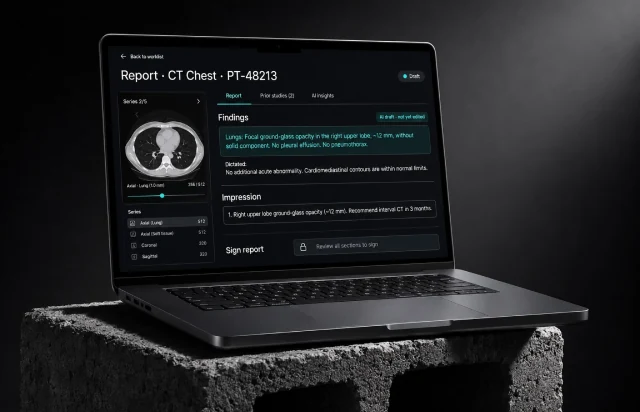
- Draft findings are written into the existing report using the group's structured templates.
- The radiologist accepts, edits or discards each suggestion and signs alone; every decision is logged.
- Dashboards track turnaround time, queue depth and model agreement per site.
Business value
- One worklist across all 12 sites, ordered by urgency.
- Urgent studies moved to the front by triage, whatever site they came from.
- AI findings inside the report the radiologist was already writing.
- Accession and patient identifiers matched across PACS and RIS before a report is attached.
- Priors fetched automatically and open alongside the study.
- 9 months from discovery to full multi-site rollout.
User flow