
Employee Health Risk Assessment
- #Prediction
A mobile and web wellness app for a US insurtech client. Python models read 14 days of tracker data, estimate individual health risks and return scores with plain-language recommendations, while the insurer sees aggregate scores only.
- Machine Learning
Impact
A US insurtech client wanted a corporate wellness product built on health-tracker data. The inherited mobile app crashed on common flows, the backend failed under real load, and the data pipeline lost or duplicated the records the risk models depended on.
We stabilized the product, reworked the Python services that run the risk models and rebuilt the mobile app and backend without taking it offline. It runs on iOS, Android and the web, with role-based access for employees, corporate admins and the insurer.
Services we provided
Risk Model Services in Python
Codebase Audit and Stabilization
Data Pipeline Repair
Mobile and Web Development
Product Design
Full Cycle QA
App Store Publishing
Tech Stack

Python
Challenges and Solutions
🧐 Challenges
- Risk models needed at least 14 days of clean activity data per user, but the inherited pipeline lost or duplicated records.
- The mobile app crashed on common flows and the backend went down under real load.
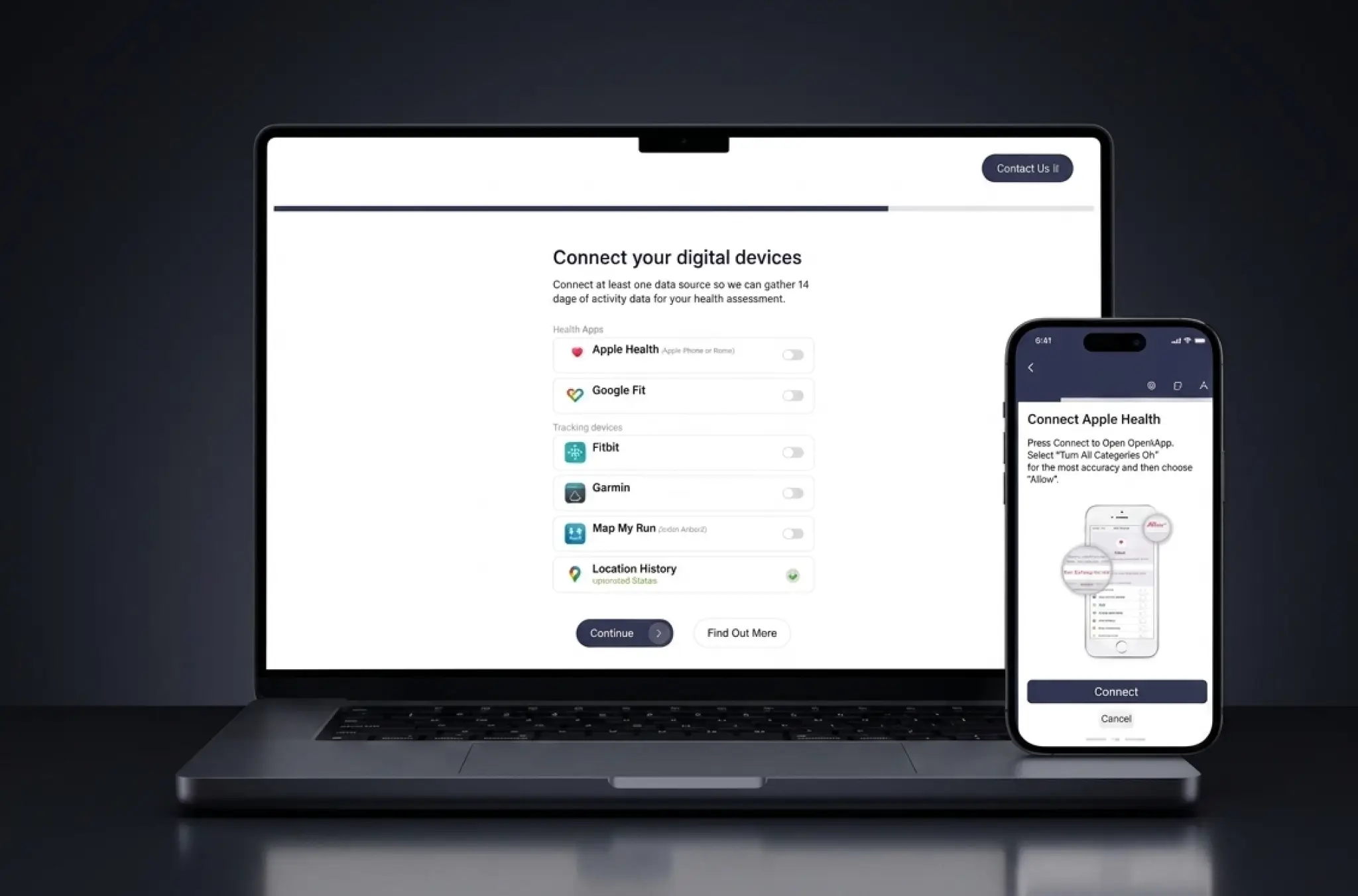
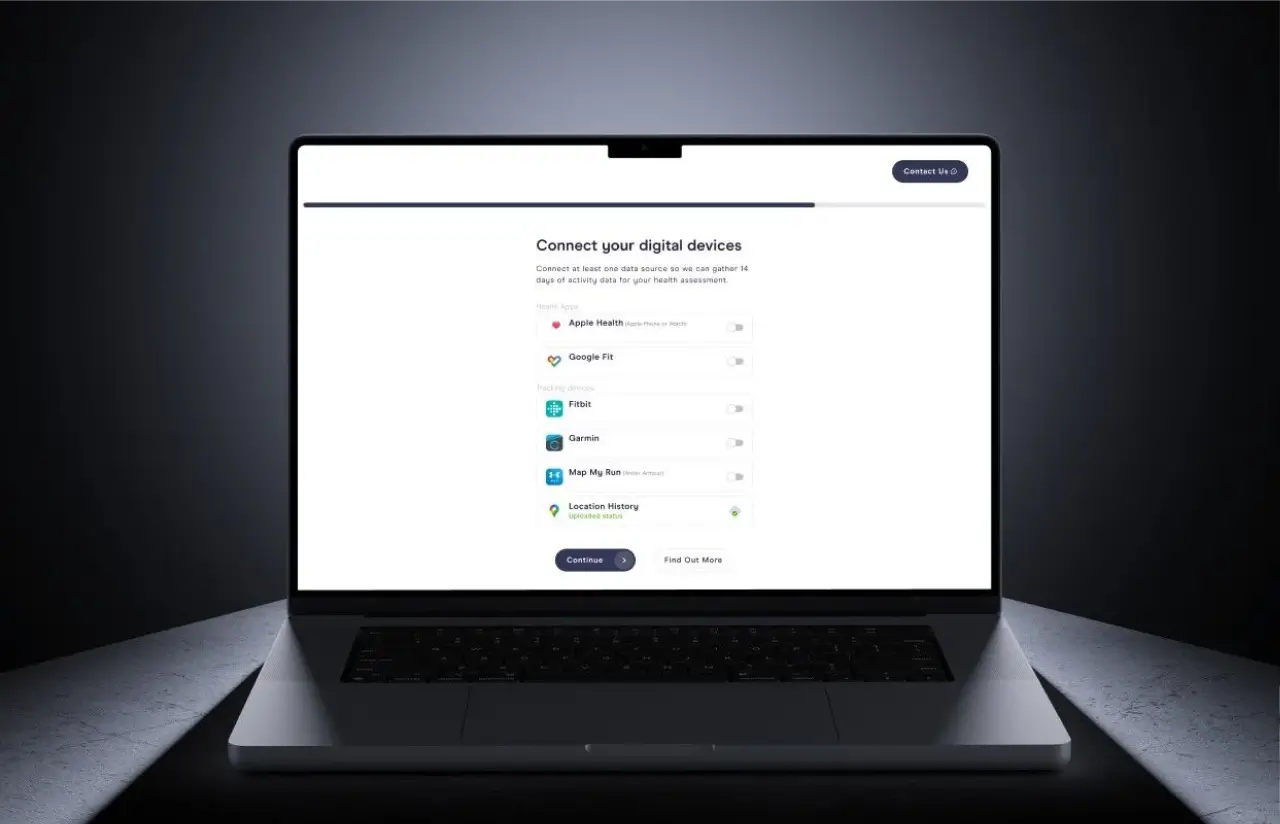
- Apple Health on a phone and ZIP uploads in a browser had to feed the same assessment.
- Individual health records had to stay private while the insurer still got aggregate risk scoring.
💡 Solutions
- Python models read 14 days of activity data and estimate the probability of specific health risks.
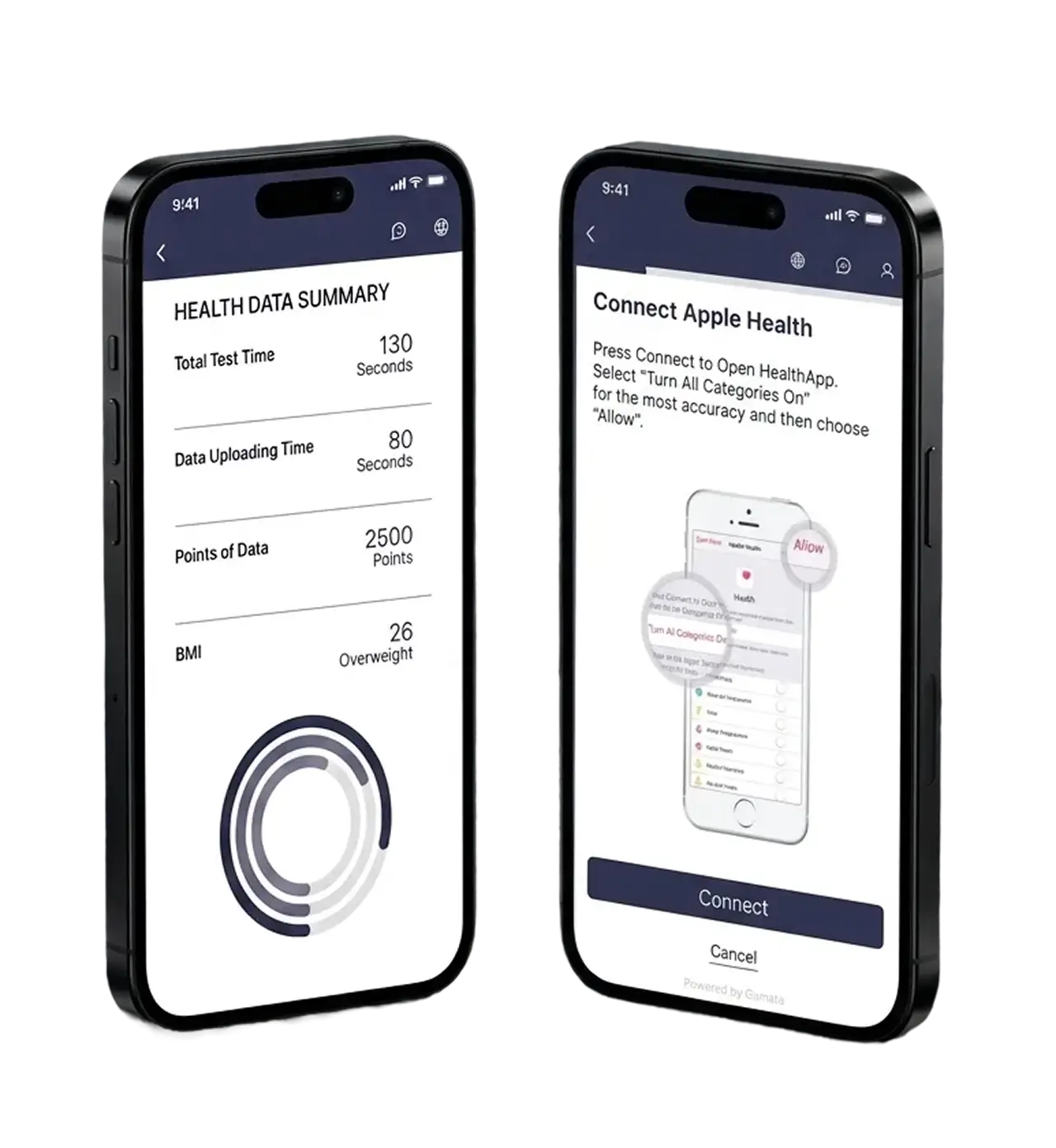
- Reworked risk services process around 2,500 data points per assessment reliably instead of failing partway through.
- Scores per risk factor and BMI category arrive with plain-language improvement recommendations.
- Trackers sync automatically from 6 sources, from Apple Health to Garmin, and web users can upload a ZIP archive.
- Data is encrypted and access is role-based: employees see their own records, the insurer sees aggregate scores only.
- The mobile app and backend were rebuilt on a new architecture without taking the live product offline.
Business value
- 6 health data sources connected, from Apple Health to Garmin.
- 2,500+ data points processed per assessment.
- Risk scores within minutes of upload instead of days of manual processing.
- A full assessment takes about 130 seconds of testing plus about 80 seconds of upload.
- 3 user roles served: employees, corporate admins and the insurer.
- 12+ months from codebase rescue to production release.
User flow