
Candidate Matching App
- #Work Productivity
A swipe-based hiring app for a Nordic HR tech startup. An NLP pipeline parses CVs, a machine learning model scores every applicant from 0 to 100 against the job, and small employers review a ranked deck on their phone.
- Machine Learning
- Natural Language Processing
Impact
The client, a Swedish HR tech startup, serves bars, cafes and small shops with no HR team. A single opening drew about 120 applications, roughly seven in ten from people meeting a benefits quota, and owners screened CVs after closing time.
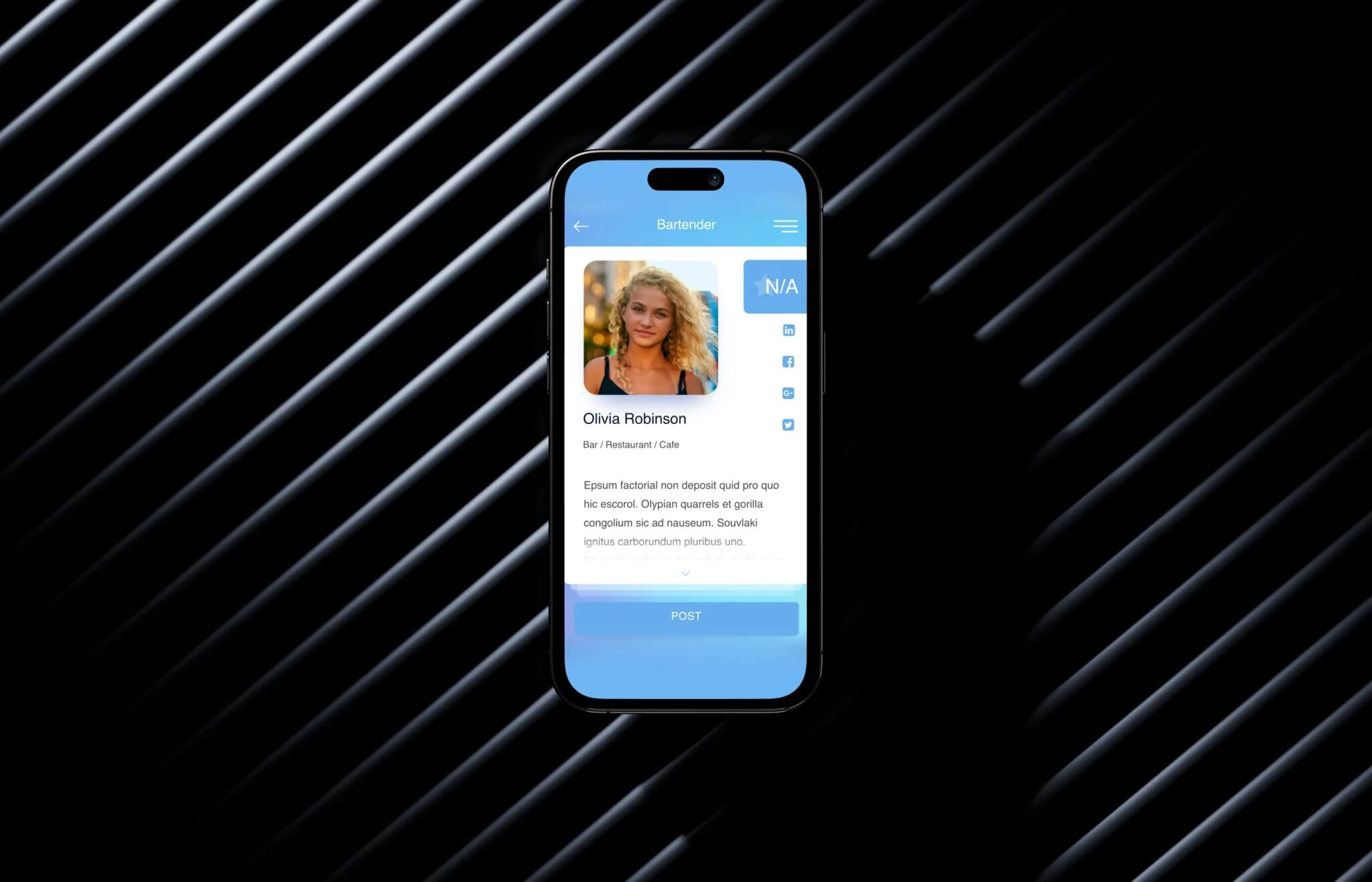
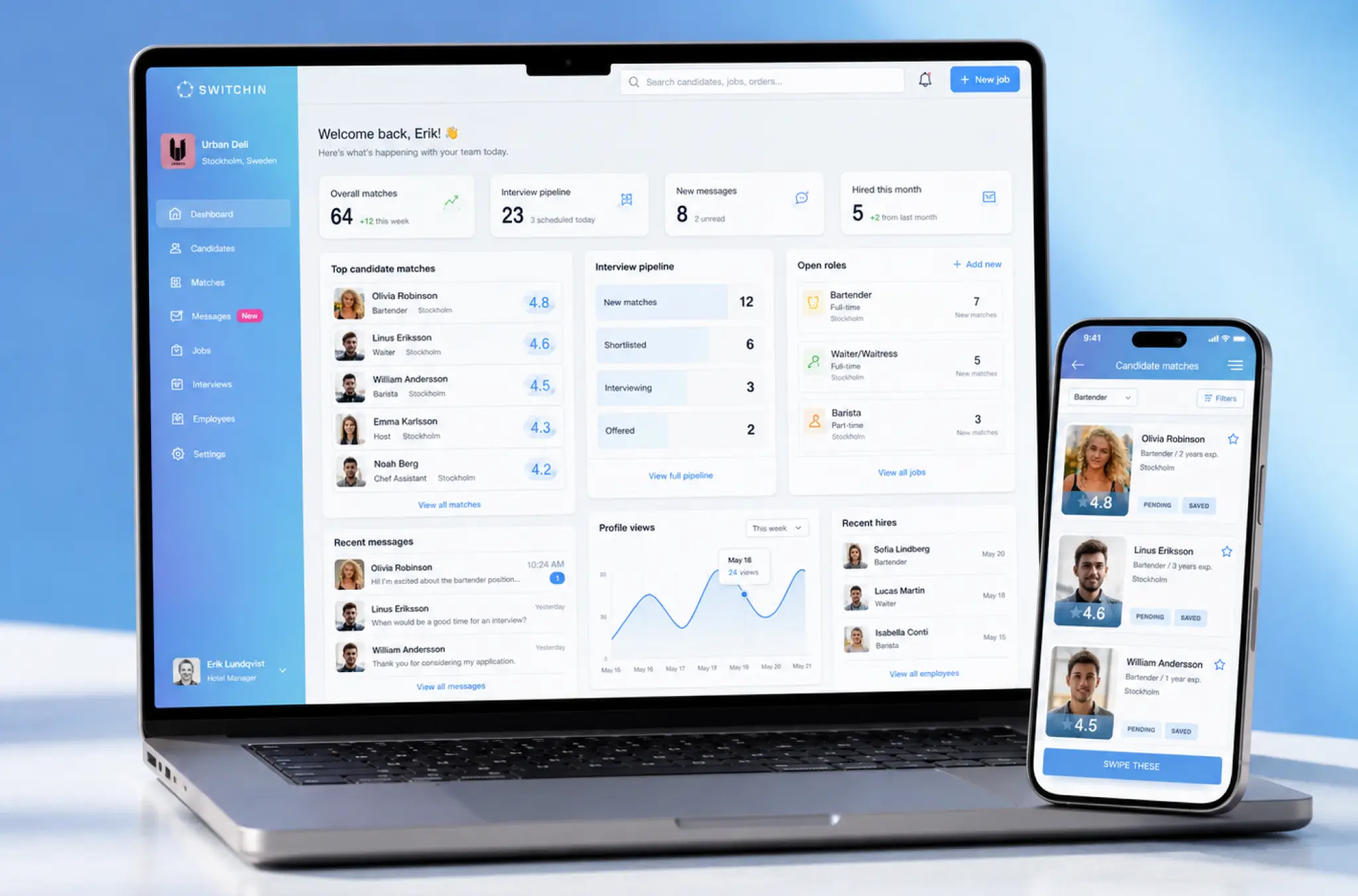
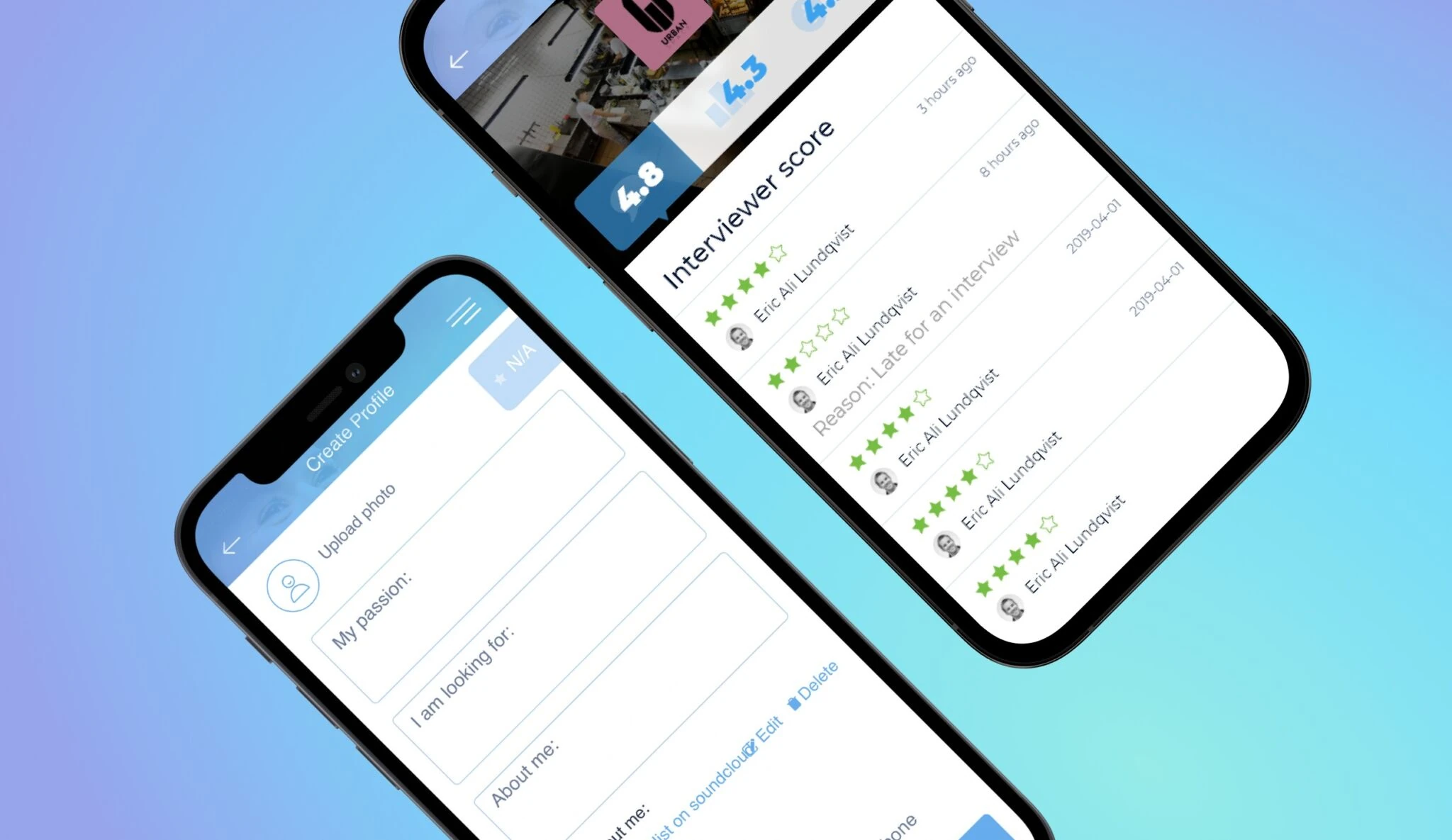
We built an NLP and machine learning layer that turns CVs into structured data and ranks candidates by relevance, inside iOS and Android apps and a web employer panel with ATS and calendar integrations. Two-way ratings after each interview feed back into future scores.
Services we provided
NLP Resume Parsing Pipeline
ML Candidate Scoring Model
Real-Time Ranking Service
Product and UI/UX Design
iOS, Android and Web Development
ATS and Calendar Integrations
Full Cycle QA
Tech Stack

Python

Tensorflow

SpaCy

Huggingface

Transformers
Challenges and Solutions
🧐 Challenges
- Applications arrived as PDFs, phone photos of printed CVs and LinkedIn exports, with nothing comparable.
- Scoring had to weigh skills, shift availability and travel distance against the job and rank candidates in an order an owner would trust.
- Ranking had to come back in well under a second over a growing candidate pool, often on cafe Wi-Fi.
- The score had to rest on standardized criteria and ignore photo, surname and age.
💡 Solutions
- A spaCy and Transformers pipeline extracts roles, dates, certifications and languages from Swedish and English CVs at roughly 92% accuracy.
- A model reads job descriptions and candidate profiles as feature vectors and returns a relevance score from 0 to 100, linking terms like barista and coffee bar staff.
- Applying to unrelated jobs lowers a candidate's score, which keeps quota applications out of the employer's deck.
- An in-memory ranking service returns a sorted deck for a pool of about 5,000 candidates in under 400 ms.
- Photo, surname and age stay hidden until both sides match, and post-interview ratings feed back into scores.
- A REST API pushes matches into the employer's ATS and calendar tools.
Business value
- 65% fewer irrelevant applications per role.
- 58% faster time to hire: 11 days on average, down from 26.
- 92% resume parsing accuracy.
- <400 ms to rank a candidate pool.
- About 40 minutes of review per opening instead of 6 to 8 hours.
- No-shows near 6% once two-way ratings went live.
User flow