
Irrigation Management Platform
- #Analytics
- #Prediction
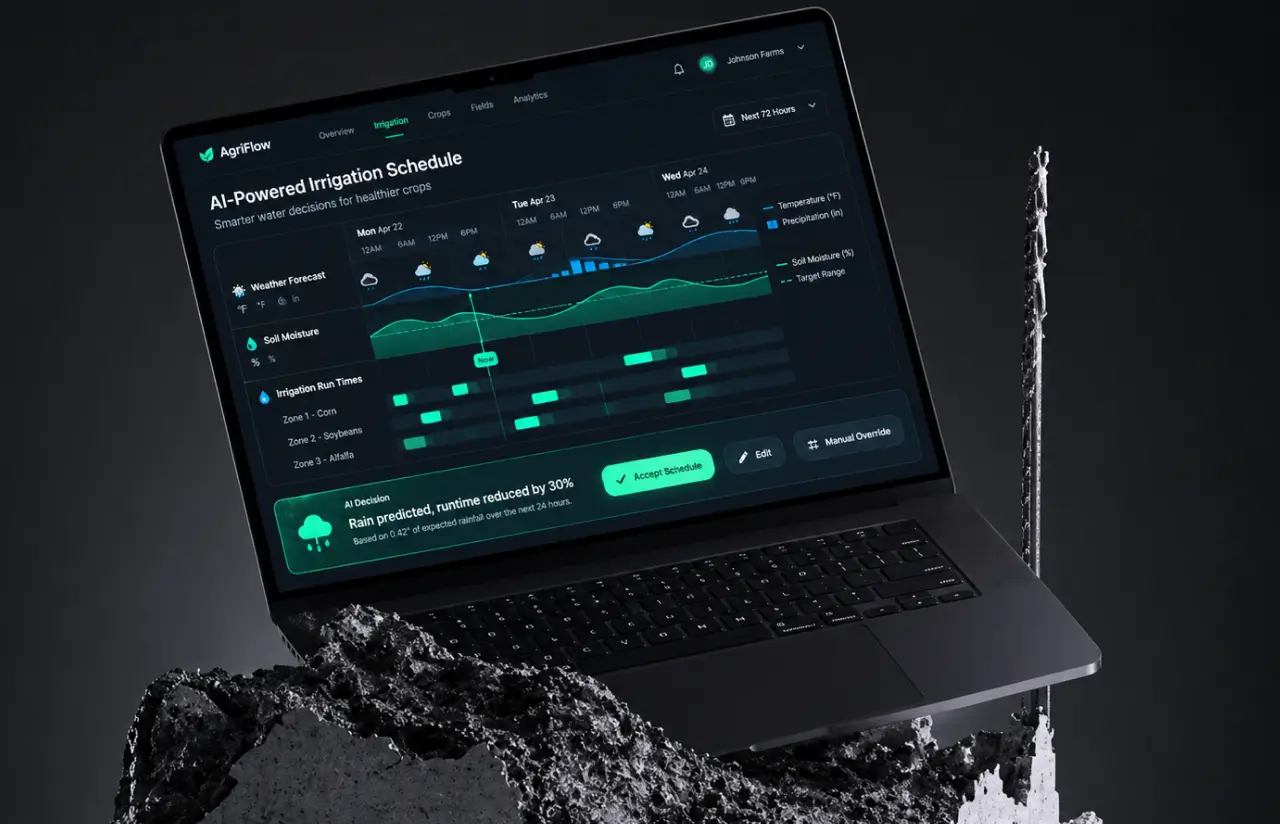
An AI-powered irrigation platform for Scotts Miracle-Gro. Models weigh soil moisture, a 72-hour weather forecast and crop stage to draft nightly watering schedules per zone across 40K+ connected controllers, and operators approve them from a phone.
- Machine Learning
Impact
Scotts Miracle-Gro had controllers on about 60 farm sites in three states, each watering on a fixed calendar, rain or no rain. Crews drove out to adjust timers by hand, devices from four vendors had four dashboards, and backend changes took about two weeks to ship.
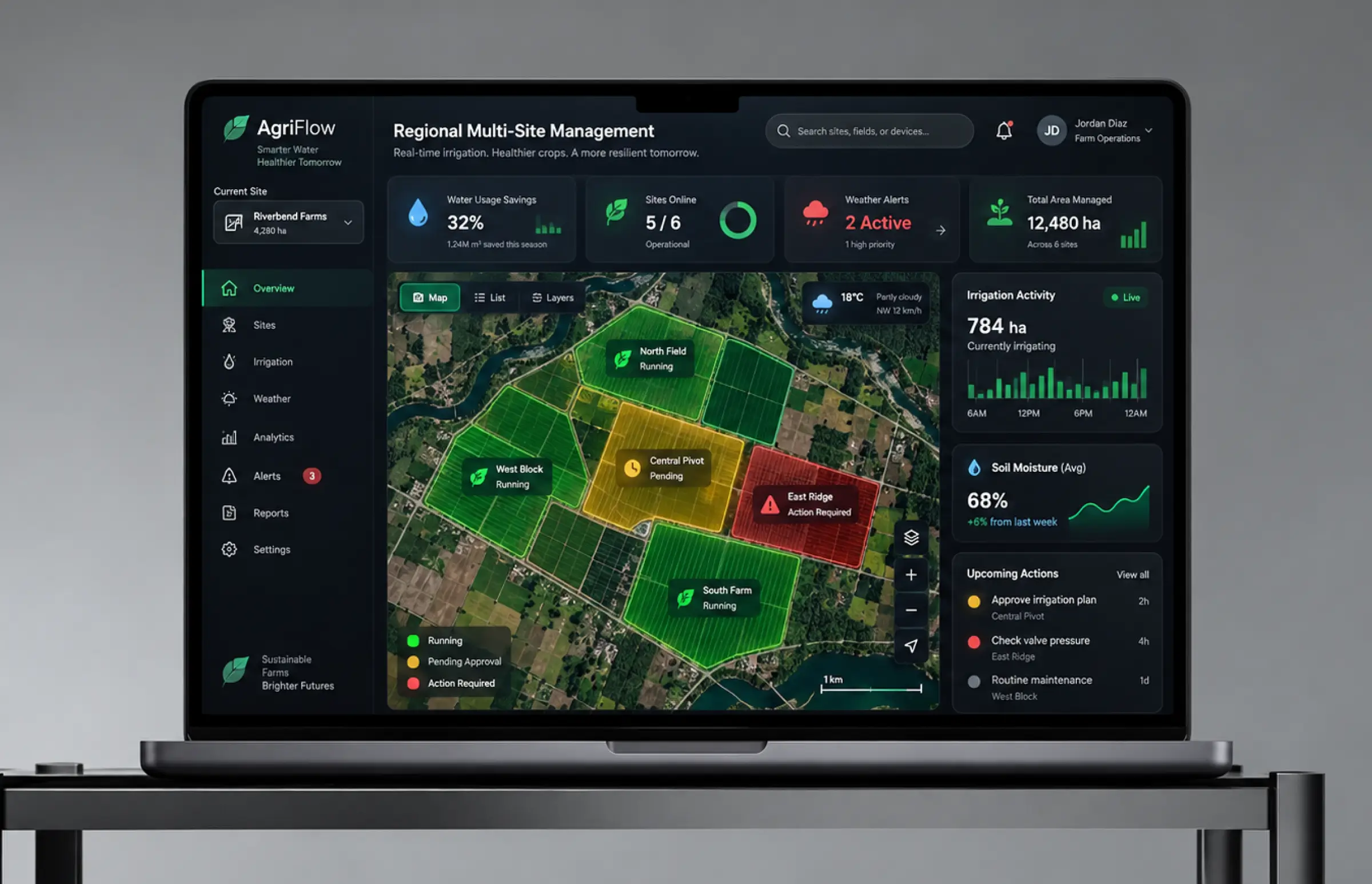
We built a server-side platform where AI models turn soil moisture, a 72-hour forecast and crop stage into nightly schedules per zone, with the reasoning shown for every change. It runs as Python services on Kubernetes, with iOS and Android apps for field crews and a web dashboard for agronomists and managers.
Services we provided
AI Water Scheduling Models
IoT Hardware Integration
Python Backend on Kubernetes
DevOps and CI/CD
Mobile and Web App Development
Product Design and QA
Tech Stack

Python

PostgreSQL

AWS

Docker

GitLab
Challenges and Solutions
🧐 Challenges
- Calendar schedules ignored soil moisture, weather and crop stage, so some zones took 20–30% more water than they needed.
- Controllers, sensors and weather stations came from four vendors with different protocols and separate dashboards.
- Shared logins gave everyone the same remote control of valves, with no audit trail of who changed what.
- Backend changes took about two weeks to deploy, so nothing could be tested quickly.
💡 Solutions
- AI models combine soil moisture, a 72-hour weather forecast and crop stage to set run times per zone every night.
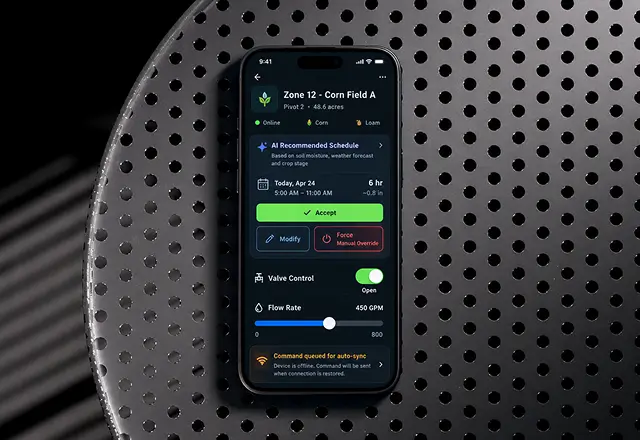
- Every automated change shows its inputs, and operators can accept, edit or override the plan from a phone.
- Real-time monitoring raises an alert within about 60 seconds when a valve stays open too long or flow drops 15% below the norm.
- An adapter layer speaks LoRaWAN and MQTT to controllers from four vendors.
- Role-based access per site with a full log of every command.
- Terraform environments and GitLab CI/CD took releases from about two weeks to same-day.
Business value
- ~28% less water used per season.
- ~35% lower cloud infrastructure spend.
- 99.9% platform uptime after launch.
- 40K+ connected controllers under management.
- Under 60 seconds to change a zone remotely.
- Support tickets about watering down by around 40% in the first six months.
User flow