
n8n Social Media Automation
- #Social Network
- #Work Productivity
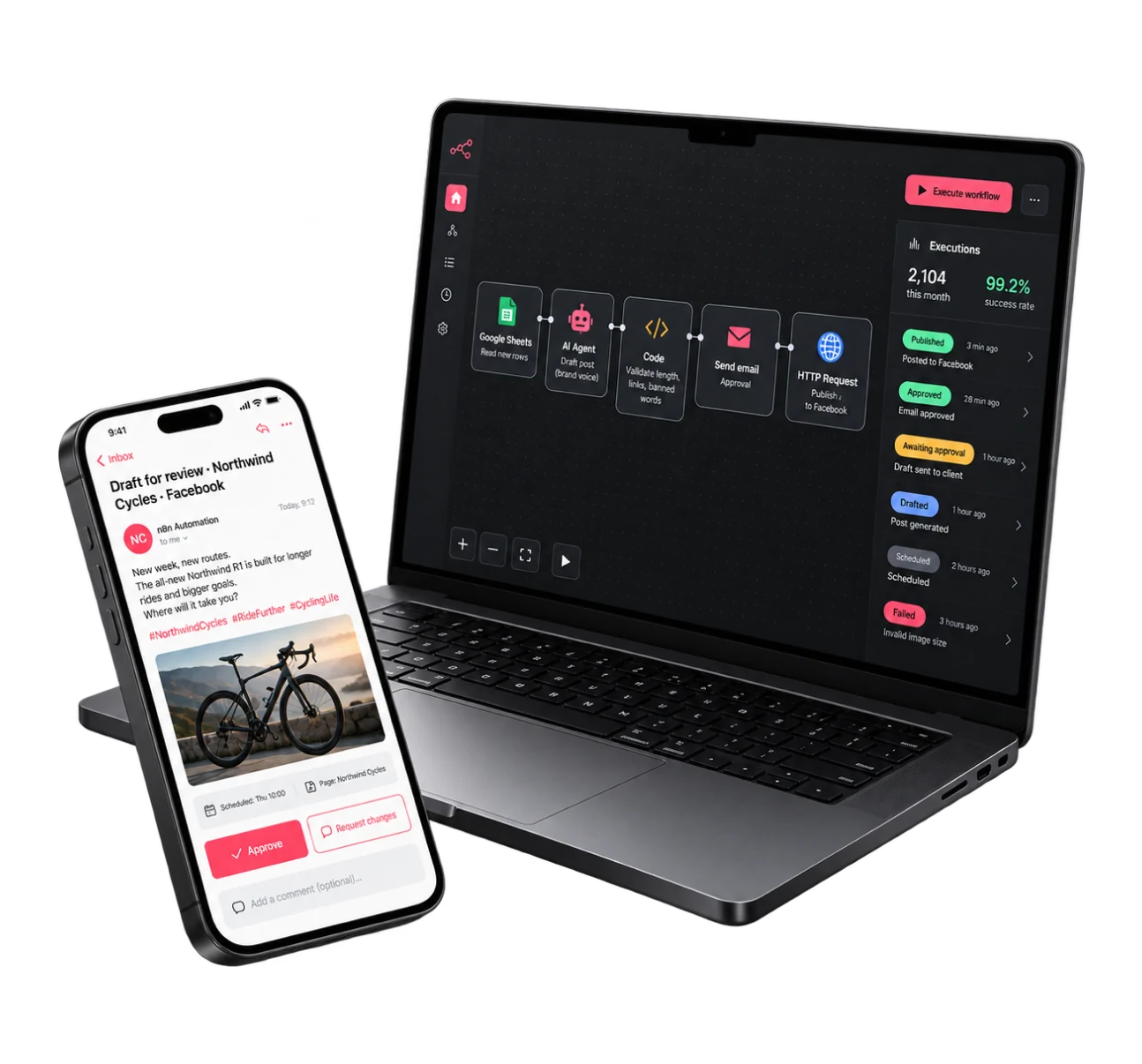
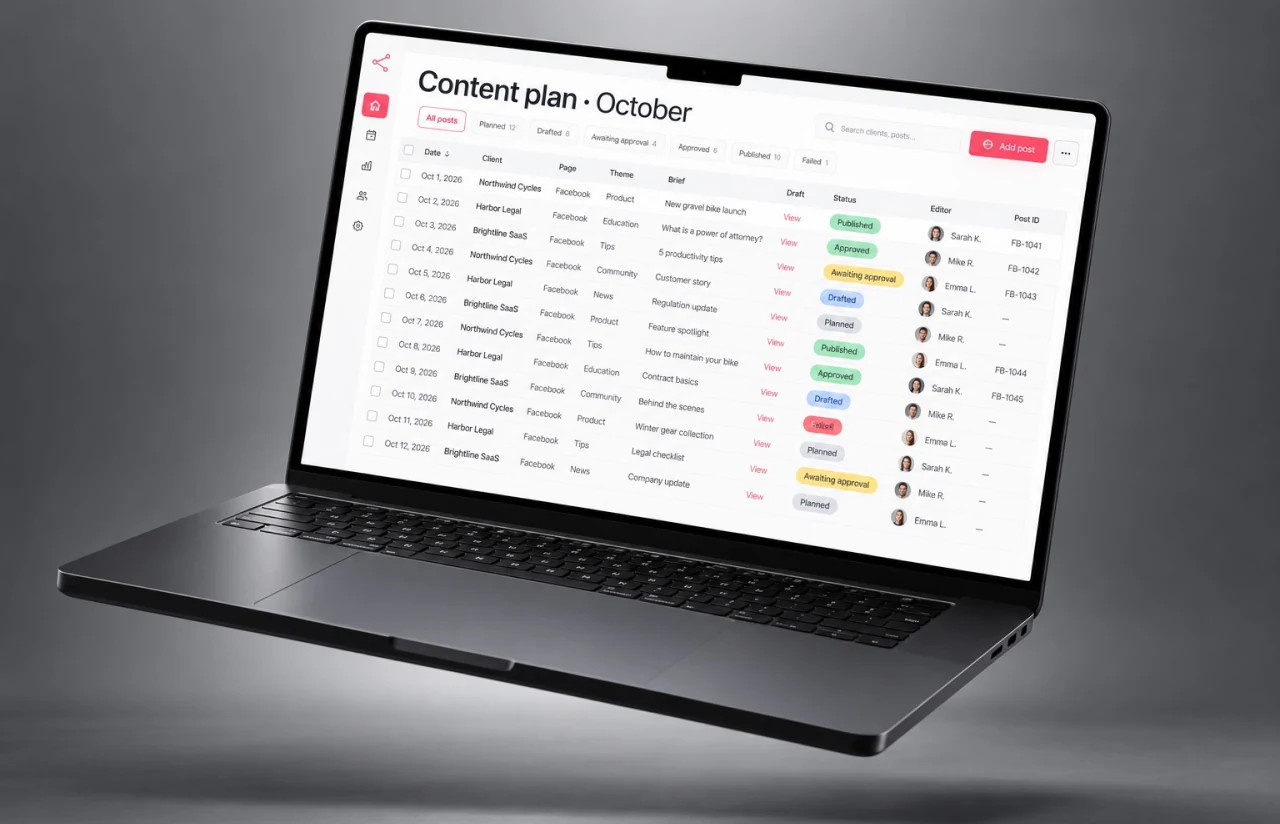
An n8n automation for a UK marketing agency. It reads the content plan from Google Sheets, has an AI agent draft each post, sends it for one-click email approval and publishes it to the right Facebook page on schedule.
- Natural Language Processing
Impact
The client is a UK digital marketing agency that runs Facebook pages for about 14 client brands. Two content managers wrote, scheduled and published about 120 posts a month by hand, 20 to 30 minutes each, and every post still needed the client sign-off written into the contracts.
We built three self-hosted n8n workflows in Docker: an AI agent drafts each post from the brief and the brand voice guide, an editor approves it by email, and the Facebook Graph API publishes it on time. Status, approvals and post IDs are written back to the planning sheet.
Services we provided
n8n Workflow Automation
AI Agent Post Generation
Draft Validation and Scoring
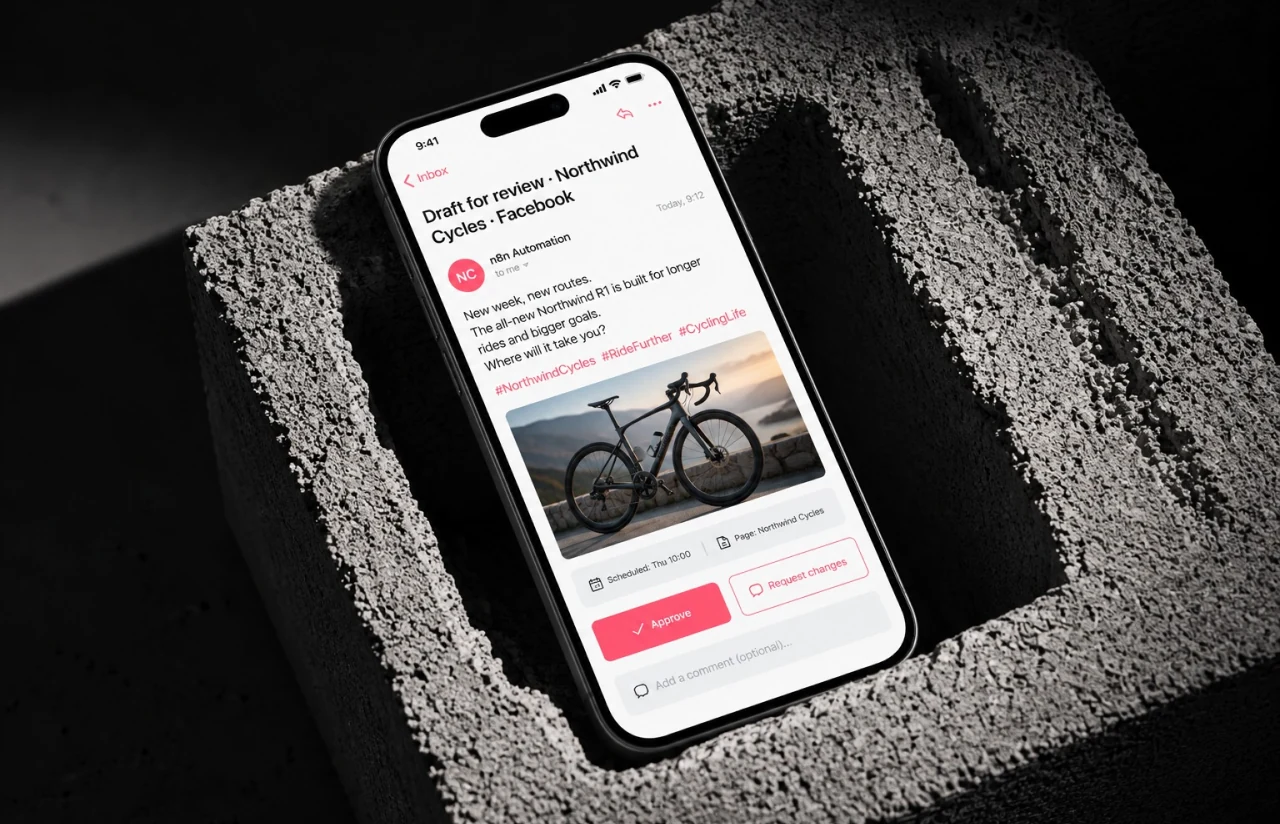
Email Approval Workflow
Facebook Graph API Integration
QA and Client Page Onboarding
Reporting and Alerts
Tech Stack

Docker
Challenges and Solutions
🧐 Challenges
- Every post went through the same manual steps by one of two people, and about 9% of scheduled slots were missed.
- Client contracts required sign-off before publishing, so the pipeline could not be fully hands-off.
- Plans, drafts, scheduling and feedback lived in four tools that did not talk to each other, so status was tracked by hand.
💡 Solutions
- The planning sheet stays the single source of truth, with a status column the workflows update themselves.
- An AI agent node drafts each post from the brief, the brand voice guide and the last five published posts.
- Each draft is checked for length, links and banned words, then rated by a second model call; weak drafts are regenerated.
- Editors approve or request changes from one email, and their comment goes straight back into the regeneration prompt.
- Approved posts publish via the Facebook Graph API at the planned time, with two retries and the post ID written back.
- A daily Slack digest, approval reminders after 24 hours and failure alerts for the ops lead.
Business value
- ~75% less hands-on time per post: about 6 minutes instead of 20 to 30.
- 2.5x more posts a month: ~300 from the same two-person team.
- 81% of generated drafts approved.
- <1% missed slots, down from ~9%.
- ~2,100 workflow executions a month.
- Built and launched in six weeks.
User flow